The PRE-PDAC pilot study aims to evaluate the effectiveness of a Polygenic Risk Score (PRS) in predicting the risk of developing pancreatic ductal adenocarcinoma (PDAC)—one of the deadliest cancers due to its typically late diagnosis, limited treatment options, and rapid progression.
The study, carried out in collaboration between Università Cattolica del Sacro Cuore and the IRCCS San Raffaele Hospital, involves both patients with a histological diagnosis of PDAC and healthy control subjects. The PRS, calculated from known genetic variants, is integrated with clinical and behavioral risk factors (such as diabetes and smoking) to build a multifactorial risk stratification model.
The primary objective is to assess the association between the PRS and the likelihood of developing PDAC. Secondary objectives include analysing how certain factors—such as age, sex, tumor characteristics, the presence of specific blood biomarkers (CA19-9 and IL-6), and the type of treatment received—vary across different genetic risk groups.
The pilot study seeks to identify high-risk population subgroups in order to guide targeted interventions and promote personalised surveillance strategies within a precision medicine framework.

Breast cancer is the most common form of cancer among women in Italy. Today, medicine is exploring new tools to improve prevention, such as the use of genetic information.
A pilot study conducted in Rome at the Policlinico Gemelli, in collaboration with the Università Cattolica del Sacro Cuore, involves 510 women to assess whether knowing one’s genetic risk—calculated through a score called the Polygenic Risk Score (PRS)—can help personalise breast cancer prevention.Through a simple blood test, participants will find out whether their DNA contains genetic variants that increase the risk of developing this disease. The results will be integrated with other personal and family risk factors using the CanRisk model, an advanced tool for estimating individual risk.Based on this information, the women will receive personalised prevention advice, such as more frequent screenings or risk-reducing strategies. Researchers will also evaluate how acceptable and useful this approach is in everyday clinical practice.
This study represents an important step toward more personalised medicine, where genetics can support individuals in taking more informed and effective care of their health.

Ovarian cancer is the gynecological malignancy with the highest mortality rate in Europe. Its prognosis is often poor due to several factors, including:
The Polygenic Risk Score (PRS) is an index that measures an individual’s genetic predisposition to developing a specific disease. This score is calculated by analysing thousands of genetic variants associated with the risk of a given condition and can be obtained through a simple blood or saliva sample. The PROVE prospective study, promoted by the Università Cattolica del Sacro Cuore and conducted at the Gemelli University Hospital in Rome, aims to assess the effectiveness of PRS in predicting the genetic risk of developing epithelial ovarian cancer in the Italian population. The study will involve 1,300 women, divided between cases (confirmed cancer) and controls (healthy individuals), all undergoing blood sampling to identify genetic variants necessary for PRS calculation. This approach could represent an innovative prevention strategy. Key potential benefits include:

Heart diseases, such as heart attacks and strokes, are very common and often caused by unhealthy lifestyles, like poor diet, physical inactivity, or smoking. To prevent them, medicine is exploring new ways to motivate people to live healthier lives.A pilot study conducted in Rome on 650 employees of the Gemelli University Hospital aims to understand whether knowing one’s genetic risk—what is written in the DNA—can encourage individuals to adopt healthier lifestyles. The study is coordinated by the Hygiene Section of the Università Cattolica del Sacro Cuore, in collaboration with the Cardiology Department of the Gemelli University Hospital.
Through a blood sample, participants will discover whether they are genetically predisposed to developing cardiovascular diseases. They will then receive personalised advice on nutrition, physical activity, and other healthy habits, based on the guidelines of the European Society of Cardiology (ESC). Researchers will check after six months whether participants have improved their behaviors and cholesterol levels.
This study will help determine whether genetic information can truly motivate individuals to take better care of their health. In the future, this approach could become part of routine medical practice.

The Generation Gemelli pilot project aims to investigate how environmental exposures affecting the mother before and during pregnancy can influence the newborn’s health and development in early childhood. Specifically, the project focuses on two clinically significant conditions: preterm birth and intrauterine growth restriction. The initiative stems from the growing attention to the so-called “first 1000 days” of life, a crucial period during which the foundations for a child’s future health and physical, cognitive, and behavioural development are established.
The study, conducted at the A. Gemelli University Hospital IRCCS, involves the enrolment of mother-newborn pairs, the collection of biological samples (blood, placenta, saliva, meconium), and the administration of a questionnaire on environmental conditions and lifestyle factors. Children are then monitored up to the age of two to assess their growth, nutrition, possible diseases, and the development of psychomotor and social skills.
By integrating clinical, environmental, and biological data, Generation Gemelli aims to provide new scientific evidence to improve prevention strategies and promote targeted interventions from the very earliest stages of life.

The CAREVAX project is an initiative aimed at improving access to vaccinations for vulnerable adult patients, reducing the risk of preventable diseases. Developed in Rome through a collaboration between the Fondazione Policlinico Gemelli IRCCS and ASL RM1, the project leverages digital technologies to automatically identify patients who need vaccinations, enhancing coordination between hospitals and local healthcare services.
How does it work?
An intelligent algorithm analyses patients’ clinical data (such as age, chronic conditions, and treatments) and cross-references it with the Digital Vaccination Registry to determine which vaccines are missing. Eligible patients receive an invitation to get vaccinated, with the option to do so either at the hospital or at ASL centers. The recommended vaccinations include:
Benefits of the CAREVAX model
Personalisation: The algorithm selects only those patients who will truly benefit from vaccination.
Efficiency: It reduces human error and automates an otherwise complex process.
Hospital-to-community integration: It bridges the gap between healthcare facilities, improving care continuity.
Innovation and future vision
CAREVAX serves as a pilot model for digital health, opening new possibilities for the integration of IT advancements and preventive care. The outcomes can inform more effective health policies and support the expansion of this approach to other regions and patient categories.
To deploy an interoperable web-based platform to provide epidemiological and health surveillance against LTBI (Latent Tubercolosis Infection) in the hospital setting.
Tuberculosis (TB) prevention represents a primary objective in both hospital and academic settings. Given the potential progression or reactivation of latent TB infection (LTBI), screening of healthcare workers and medical students is currently a key component of TB control programs.
This ambispective observational pilot study aims to:
Total sample size: 3,503 participants (FPG/UCSC, UNIPA, UNIBA/University Hospital of Bari).

Developing a predictive model for diseases related to heavy metals and nanoparticles, through the identification of a shared clinical and laboratory profile between allergic contact dermatitis and systemic allergic syndrome, along with the investigation of susceptibility biomarkers in a large at-risk population, will enable the assessment of the health effects of exposure to emerging contaminants and the early identification of individuals at risk for metal-related diseases.
Environmental and health data collected will be integrated into a digital platform to support the development of predictive models based on algorithmic approaches.
The target population of the study includes patients with allergic contact dermatitis to metals (Nickel, Chromium, Cobalt, Palladium, Copper, Molybdenum, and Aluminum), patients with systemic allergic syndromes related to metals, at-risk workers, and healthy individuals.
The study will be conducted in multiple phases and will involve the following centers and associations: Fondazione Policlinico Universitario A. Gemelli (FPG), University of Bologna (UNIBO), University of Palermo (UNIPA), Azienda Ospedaliera Universitaria Policlinico di Catania (AOUPCT), and the Regional Environmental Protection Agency – Sicily (ARPA Sicilia).

The primary objective of the EVACS initiative is to include hard-to-reach patients in health communities, in order to enhance vaccination coverage among these population groups. This goal will be achieved by creating an integrated flow system between existing healthcare platforms and the territory, which will aid in identifying these patients.
To accomplish this, ICT systems will be utilized to analyse sentiment about vaccinations on social media and to identify gasp in immunization coverage.
Ultimately, this project will empower and increase engagement among these population groups.
The sample size for the present study could be the identification of tailored vaccination needs for approximately 25% of the hard-to-reach estimated target (15000 to be identified/60000 estimated) and the provision of proper vaccination for the 30% of the identified population.
This project aims to identify early metabolic indicators of gestational diabetes risk using isothermal calorimetry to monitor red blood cell metabolism. By detecting these markers in the first trimester, it enables early intervention through tailored diet and lifestyle changes. The study compares metabolic profiles of high-risk and healthy women to validate this approach, potentially revolutionizing primary prevention of gestational diabetes.
To leverage isothermal calorimetry to monitor red blood cell metabolism and detect early metabolic changes linked to gestational diabetes mellitus, enhancing primary prevention by identifying at-risk individuals for timely interventions.
Sample size: 30 Healthy pregnant women and 30 pregnant women with gestational diabetes.
Liver dysfunctions are on the rise, along with cirrhosis, hepatocellular carcinoma, and the need for liver transplantation.
Currently, there are no specific pharmacological treatments available; management relies primarily on lifestyle interventions.
In this context, secondary and tertiary prevention play a crucial role.
CALIBRE proposes an innovative model of care that integrates clinical practice with digital tools, aiming to promote early diagnosis, slow disease progression, and reduce cirrhosis-related complications. The model includes a professional dashboard and a patient-facing app designed for individuals with advanced MASLD, encouraging lifestyle change through active and informed engagement.
Each day, the patient receives:
When the patient completes at least four challenges per week, they receive a reward, such as a nutritional chart and a recipe, to encourage continued participation. This approach offers ongoing, personalised, and sustainable support, enabling healthcare professionals to more effectively manage chronic liver disease through proactive patient engagement.


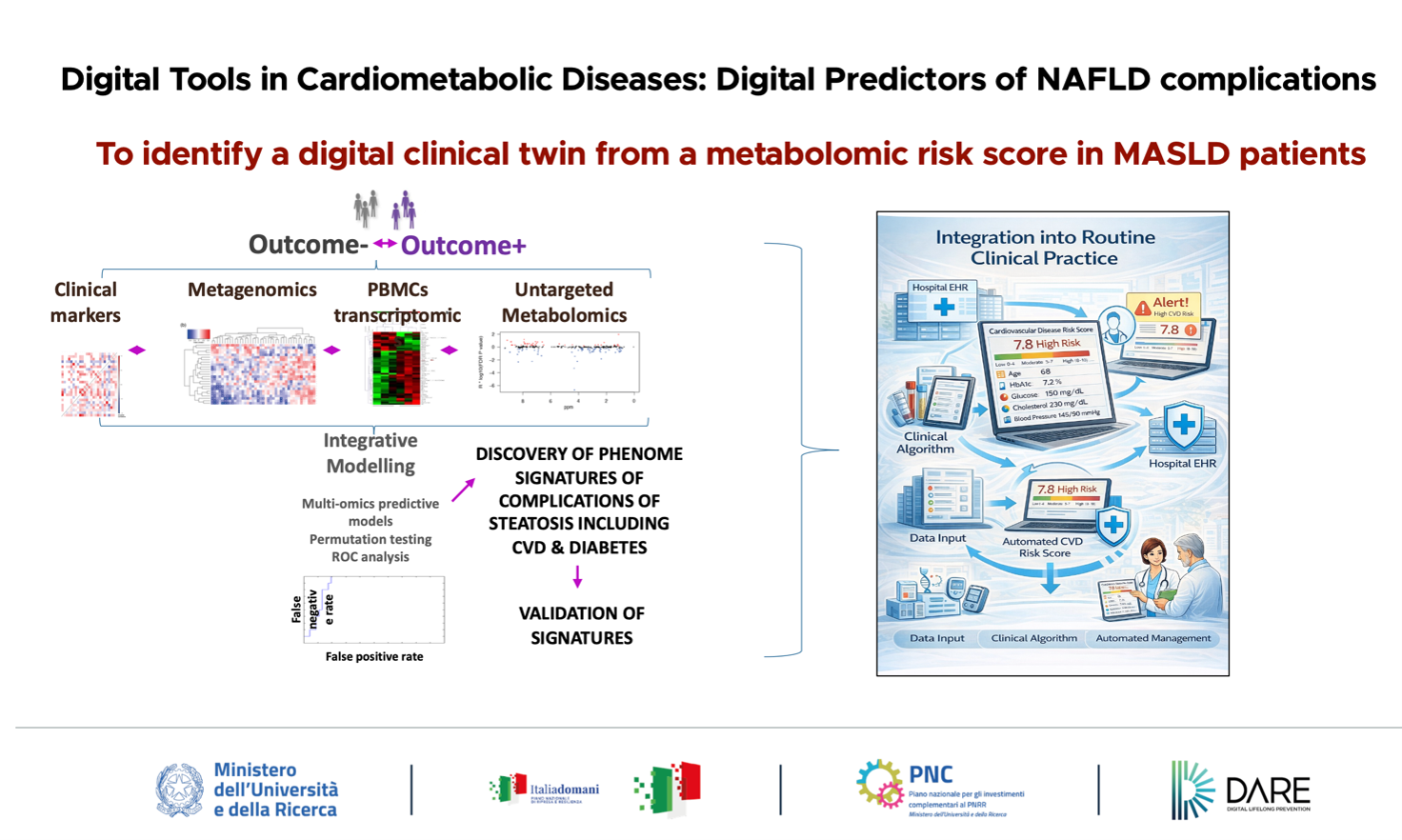
Metabolic Dysfunction-Associated Steatotic Liver Disease (MASLD) affects about 25% of adults globally and presents significant health and economic challenges. It encompasses Metabolic Dysfunction-Associated Steatohepatitis (MASH), a progressive chronic condition that can lead to end-stage liver disease (ESLD) and is predicted to become a leading cause of liver transplantation in Europe. Many early-stage MASH patients remain undiagnosed, while those with advanced fibrosis are more likely to receive timely treatments. However, diagnosing fibrosis presents challenges, especially for individuals with obesity.
To mitigate healthcare costs linked to late-stage MASH, earlier diagnosis and management are vital. This project aims to connect molecular data from severe liver areas to circulating biomarkers, creating a liquid biopsy approach for assessing MASLD severity. The specific goals include identifying a liquid biopsy fingerprint for MASLD severity, evaluating its predictive value for cardiovascular disease outcomes (the "DARE" MASLD score), and validating this score in established cohorts. The study involves detailed analyses of MASH lesions and metabolomes from patients undergoing bariatric surgery or liver biopsy, enhancing diagnosis and management strategies to prevent associated cardiovascular complications.
The project aims to lay the groundwork for developing a model of integrated healthcare and social care, supported by telemedicine and Artificial Intelligence (AI).
The development of this model will take into account the guidelines provided in the Decalogue for the implementation of national healthcare services through Artificial Intelligence systems.The overall objective is to create an algorithm based on Machine Learning (ML) techniques to predict the length of hospital stay for patients. This model will provide useful insights to help prevent Over-Threshold (OT) hospitalisations and reduce the percentage of Frequent Users (FU) of healthcare services.
The research project involves the development of the predictive system through a retrospective cohort study, based on routinely collected information by hospital staff and provided to the Health Directorate of the Tor Vergata University Hospital (PTV), which is involved in the project.
The model will be developed using data from hospital admissions in the years 2022, 2023, and 2024. The data used will be obtained from Hospital Discharge Records (SDO) and from the Emergency Information Management System (GIPSE).
The stages of the pilot:

The pilot project, coordinated by Dr. Ida Cariati at the University of Rome “Tor Vergata,” aims to develop an innovative approach for the early identification of osteoporosis and sarcopenia, closely related conditions that compromise musculoskeletal health during aging. The working hypothesis is based on the integration of clinical, biological, and imaging data to enhance the predictive capacity of currently available diagnostic models. In this context, the project integrates imaging analyses and biomarkers associated with cellular aging processes, including mitochondrial dysfunction, oxidative stress, and alterations in homeostasis. These data are complemented by histomorphological assessments of bone and muscle tissue to describe structural and functional changes related to disease progression. The use of machine learning techniques enables the joint analysis of heterogeneous datasets, allowing the identification of predictive patterns that cannot be detected with traditional approaches and improving fragility fracture risk stratification. Overall, the proposed model aims to support prevention strategies and personalized interventions, contributing to earlier and more targeted management of musculoskeletal diseases and their complications.

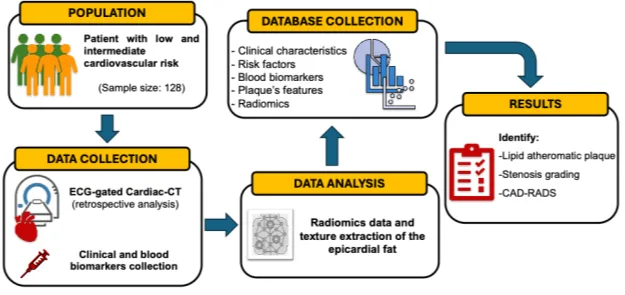
Aim: The project aims to improve cardiovascular risk stratification by integrating clinical data, biomarkers, and advanced imaging techniques, with the goal of early identification of high-risk atherosclerotic plaques, significant coronary artery stenosis, and supporting patient classification according to the CAD-RADS system.
Methods: The study included 128 patients undergoing electrocardiogram-gated cardiac computed tomography (ECG-gated Cardiac CT). Clinical data, cardiovascular risk factors, and blood biomarkers were collected and integrated into a structured database together with imaging-derived information. The analysis is based on radiomics techniques applied to epicardial adipose tissue, which is involved in inflammatory processes associated with coronary artery disease progresson. Radiomics enables the extraction of quantitative imaging features that are not visible through conventional visual assessment.
Innovation: The project introduces the integrated use of radiomics, advanced cardiac imaging, and circulating biomarkers for cardiovascular risk characterization. Analysis of epicardial adipose tissue represents a key element for identifying patterns associated with atherosclerotic plaque instability.
Expected impact: The expected results may contribute to the development of more accurate predictive tools for cardiovascular risk stratification, improve early diagnosis, support clinical classification according to CAD-RADS, and promote personalized medicine approaches based on multimodal data.
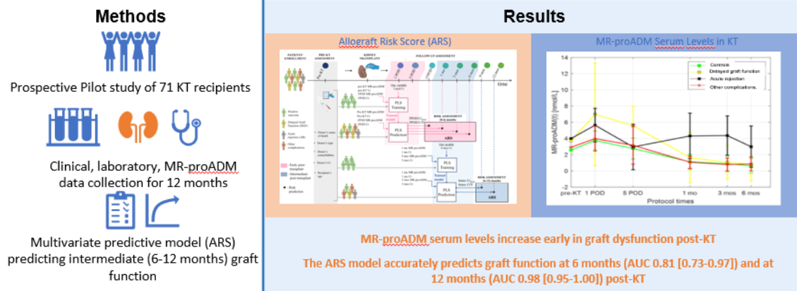
Mid-regional pro-adrenomedullin (MR-proADM) is a biomarker involved in maintaining renal homeostasis, with increased levels observed in inflammatory conditions and chronic kidney disease. The role of MR-proADM in kidney transplant (KT) recipients has not yet been investigated. This is a prospective pilot study; the descriptive analysis of the retrospective cohort of the 132 kidney transplant patients enrolled to date showed that MR-proADM may be a biomarker for predicting renal function after transplantation. The study is coordinated by the Hepatobiliary Surgery and Transplant Unit of Tor Vergata University Hospital, in collaboration with the Laboratory Medicine Unit and the Department of Medical Engineering. A time-varying risk score, the Allograft Risk Score (ARS), has been validated, in which MR-proADM plays a key role in the early assessment of changes in graft function. MR-proADM may therefore represent an excellent novel biomarker for the early and non-invasive diagnosis of organ dysfunction following kidney transplantation.
Type 1 diabetes (T1D) in children and adolescents is particularly hard to manage, because the disease and the way the body responds to insulin change constantly as a child grows. Today, research is exploring new digital tools to make this care more precise and less burdensome.
This pilot project will develop and test a mobile platform equipped with a clinical Decision Support System (DSS) designed to help doctors fine-tune insulin therapy in young patients with T1D. The system will combine data from continuous glucose monitors, smart insulin pens and meal diaries, using a digital twin approach that captures how each child's body responds individually, together with a language-model-based tool that explains its suggestions in clear terms for clinicians.
The platform will be tested in a study involving children and adolescents, grouped by age and developmental stage, to compare it against standard care. Researchers will assess whether the tool is safe, easy to use, and able to keep glucose levels stable, while also evaluating its impact on families' quality of life.
This project marks a step toward more personalised paediatric diabetes care, where digital technology can support clinicians in making faster, more informed decisions.
Within the DARE Project, an integrated deep learning bioinformatics approach was developed to assess whether immune system characteristics measured before vaccination can predict the effectiveness and durability of vaccine-induced immune responses. This objective is of relevance in children and adolescents with conditions of immune vulnerability, who are at increased risk of complications from vaccine-preventable diseases. The analyses included paediatric cohorts with HIV infection, primary immunodeficiencies, Down syndrome, inflammatory bowel disease receiving immunosuppressive therapy, and solid organ transplant recipients. Predictive models were developed using data related to the response to SARS-CoV-2 and meningococcal B vaccines.
The methodological approach integrated clinical and high-dimensional immunological data, including serology, phenotypic characterization of T and B lymphocytes by multiparameter flow cytometry, evaluation of SARS-CoV-2-specific T cells following stimulation with viral peptides, and transcriptomic analysis. The integration of these data enabled the identification of immune signatures associated with vaccine immunogenicity and the durability of the immune response. The results, described in publications PMID: 42027105, PMID: 39947073, and PMID: 38775152, provide the basis for the development of predictive biomarkers and personalized vaccination strategies for vulnerable paediatric populations. PMID: 42027105, 39947073 e 38775152, pongono le basi per lo sviluppo di biomarcatori predittivi e di strategie vaccinali personalizzate nelle popolazioni pediatriche vulnerabili.

The PRE-PDAC pilot study aims to evaluate the effectiveness of a Polygenic Risk Score (PRS) in predicting the risk of developing pancreatic ductal adenocarcinoma (PDAC)—one of the deadliest cancers due to its typically late diagnosis, limited treatment options, and rapid progression.
The study, carried out in collaboration between Università Cattolica del Sacro Cuore and the IRCCS San Raffaele Hospital, involves both patients with a histological diagnosis of PDAC and healthy control subjects. The PRS, calculated from known genetic variants, is integrated with clinical and behavioral risk factors (such as diabetes and smoking) to build a multifactorial risk stratification model.
The primary objective is to assess the association between the PRS and the likelihood of developing PDAC. Secondary objectives include analysing how certain factors—such as age, sex, tumor characteristics, the presence of specific blood biomarkers (CA19-9 and IL-6), and the type of treatment received—vary across different genetic risk groups.
The pilot study seeks to identify high-risk population subgroups in order to guide targeted interventions and promote personalised surveillance strategies within a precision medicine framework.
Breast cancer is the most common form of cancer among women in Italy. Today, medicine is exploring new tools to improve prevention, such as the use of genetic information.
A pilot study conducted in Rome at the Policlinico Gemelli, in collaboration with the Università Cattolica del Sacro Cuore, involves 510 women to assess whether knowing one’s genetic risk—calculated through a score called the Polygenic Risk Score (PRS)—can help personalise breast cancer prevention.Through a simple blood test, participants will find out whether their DNA contains genetic variants that increase the risk of developing this disease. The results will be integrated with other personal and family risk factors using the CanRisk model, an advanced tool for estimating individual risk.Based on this information, the women will receive personalised prevention advice, such as more frequent screenings or risk-reducing strategies. Researchers will also evaluate how acceptable and useful this approach is in everyday clinical practice.
This study represents an important step toward more personalised medicine, where genetics can support individuals in taking more informed and effective care of their health.
Ovarian cancer is the gynecological malignancy with the highest mortality rate in Europe. Its prognosis is often poor due to several factors, including:
The Polygenic Risk Score (PRS) is an index that measures an individual’s genetic predisposition to developing a specific disease. This score is calculated by analysing thousands of genetic variants associated with the risk of a given condition and can be obtained through a simple blood or saliva sample. The PROVE prospective study, promoted by the Università Cattolica del Sacro Cuore and conducted at the Gemelli University Hospital in Rome, aims to assess the effectiveness of PRS in predicting the genetic risk of developing epithelial ovarian cancer in the Italian population. The study will involve 1,300 women, divided between cases (confirmed cancer) and controls (healthy individuals), all undergoing blood sampling to identify genetic variants necessary for PRS calculation. This approach could represent an innovative prevention strategy. Key potential benefits include:
Heart diseases, such as heart attacks and strokes, are very common and often caused by unhealthy lifestyles, like poor diet, physical inactivity, or smoking. To prevent them, medicine is exploring new ways to motivate people to live healthier lives.A pilot study conducted in Rome on 650 employees of the Gemelli University Hospital aims to understand whether knowing one’s genetic risk—what is written in the DNA—can encourage individuals to adopt healthier lifestyles. The study is coordinated by the Hygiene Section of the Università Cattolica del Sacro Cuore, in collaboration with the Cardiology Department of the Gemelli University Hospital.
Through a blood sample, participants will discover whether they are genetically predisposed to developing cardiovascular diseases. They will then receive personalised advice on nutrition, physical activity, and other healthy habits, based on the guidelines of the European Society of Cardiology (ESC). Researchers will check after six months whether participants have improved their behaviors and cholesterol levels.
This study will help determine whether genetic information can truly motivate individuals to take better care of their health. In the future, this approach could become part of routine medical practice.
The Generation Gemelli pilot project aims to investigate how environmental exposures affecting the mother before and during pregnancy can influence the newborn’s health and development in early childhood. Specifically, the project focuses on two clinically significant conditions: preterm birth and intrauterine growth restriction. The initiative stems from the growing attention to the so-called “first 1000 days” of life, a crucial period during which the foundations for a child’s future health and physical, cognitive, and behavioural development are established.
The study, conducted at the A. Gemelli University Hospital IRCCS, involves the enrolment of mother-newborn pairs, the collection of biological samples (blood, placenta, saliva, meconium), and the administration of a questionnaire on environmental conditions and lifestyle factors. Children are then monitored up to the age of two to assess their growth, nutrition, possible diseases, and the development of psychomotor and social skills.
By integrating clinical, environmental, and biological data, Generation Gemelli aims to provide new scientific evidence to improve prevention strategies and promote targeted interventions from the very earliest stages of life.
The CAREVAX project is an initiative aimed at improving access to vaccinations for vulnerable adult patients, reducing the risk of preventable diseases. Developed in Rome through a collaboration between the Fondazione Policlinico Gemelli IRCCS and ASL RM1, the project leverages digital technologies to automatically identify patients who need vaccinations, enhancing coordination between hospitals and local healthcare services.
How does it work?
An intelligent algorithm analyses patients’ clinical data (such as age, chronic conditions, and treatments) and cross-references it with the Digital Vaccination Registry to determine which vaccines are missing. Eligible patients receive an invitation to get vaccinated, with the option to do so either at the hospital or at ASL centers. The recommended vaccinations include:
Benefits of the CAREVAX model
Personalisation: The algorithm selects only those patients who will truly benefit from vaccination.
Efficiency: It reduces human error and automates an otherwise complex process.
Hospital-to-community integration: It bridges the gap between healthcare facilities, improving care continuity.
Innovation and future vision
CAREVAX serves as a pilot model for digital health, opening new possibilities for the integration of IT advancements and preventive care. The outcomes can inform more effective health policies and support the expansion of this approach to other regions and patient categories.
To deploy an interoperable web-based platform to provide epidemiological and health surveillance against LTBI (Latent Tubercolosis Infection) in the hospital setting.
Tuberculosis (TB) prevention represents a primary objective in both hospital and academic settings. Given the potential progression or reactivation of latent TB infection (LTBI), screening of healthcare workers and medical students is currently a key component of TB control programs.
This ambispective observational pilot study aims to:
Total sample size: 3,503 participants (FPG/UCSC, UNIPA, UNIBA/University Hospital of Bari).
Developing a predictive model for diseases related to heavy metals and nanoparticles, through the identification of a shared clinical and laboratory profile between allergic contact dermatitis and systemic allergic syndrome, along with the investigation of susceptibility biomarkers in a large at-risk population, will enable the assessment of the health effects of exposure to emerging contaminants and the early identification of individuals at risk for metal-related diseases.
Environmental and health data collected will be integrated into a digital platform to support the development of predictive models based on algorithmic approaches.
The target population of the study includes patients with allergic contact dermatitis to metals (Nickel, Chromium, Cobalt, Palladium, Copper, Molybdenum, and Aluminum), patients with systemic allergic syndromes related to metals, at-risk workers, and healthy individuals.
The study will be conducted in multiple phases and will involve the following centers and associations: Fondazione Policlinico Universitario A. Gemelli (FPG), University of Bologna (UNIBO), University of Palermo (UNIPA), Azienda Ospedaliera Universitaria Policlinico di Catania (AOUPCT), and the Regional Environmental Protection Agency – Sicily (ARPA Sicilia).
The primary objective of the EVACS initiative is to include hard-to-reach patients in health communities, in order to enhance vaccination coverage among these population groups. This goal will be achieved by creating an integrated flow system between existing healthcare platforms and the territory, which will aid in identifying these patients.
To accomplish this, ICT systems will be utilized to analyse sentiment about vaccinations on social media and to identify gasp in immunization coverage.
Ultimately, this project will empower and increase engagement among these population groups.
The sample size for the present study could be the identification of tailored vaccination needs for approximately 25% of the hard-to-reach estimated target (15000 to be identified/60000 estimated) and the provision of proper vaccination for the 30% of the identified population.
This project aims to identify early metabolic indicators of gestational diabetes risk using isothermal calorimetry to monitor red blood cell metabolism. By detecting these markers in the first trimester, it enables early intervention through tailored diet and lifestyle changes. The study compares metabolic profiles of high-risk and healthy women to validate this approach, potentially revolutionizing primary prevention of gestational diabetes.
To leverage isothermal calorimetry to monitor red blood cell metabolism and detect early metabolic changes linked to gestational diabetes mellitus, enhancing primary prevention by identifying at-risk individuals for timely interventions.
Sample size: 30 Healthy pregnant women and 30 pregnant women with gestational diabetes.
Liver dysfunctions are on the rise, along with cirrhosis, hepatocellular carcinoma, and the need for liver transplantation.
Currently, there are no specific pharmacological treatments available; management relies primarily on lifestyle interventions.
In this context, secondary and tertiary prevention play a crucial role.
CALIBRE proposes an innovative model of care that integrates clinical practice with digital tools, aiming to promote early diagnosis, slow disease progression, and reduce cirrhosis-related complications. The model includes a professional dashboard and a patient-facing app designed for individuals with advanced MASLD, encouraging lifestyle change through active and informed engagement.
Each day, the patient receives:
When the patient completes at least four challenges per week, they receive a reward, such as a nutritional chart and a recipe, to encourage continued participation. This approach offers ongoing, personalised, and sustainable support, enabling healthcare professionals to more effectively manage chronic liver disease through proactive patient engagement.
The project aims to lay the groundwork for developing a model of integrated healthcare and social care, supported by telemedicine and Artificial Intelligence (AI).
The development of this model will take into account the guidelines provided in the Decalogue for the implementation of national healthcare services through Artificial Intelligence systems.The overall objective is to create an algorithm based on Machine Learning (ML) techniques to predict the length of hospital stay for patients. This model will provide useful insights to help prevent Over-Threshold (OT) hospitalisations and reduce the percentage of Frequent Users (FU) of healthcare services.
The research project involves the development of the predictive system through a retrospective cohort study, based on routinely collected information by hospital staff and provided to the Health Directorate of the Tor Vergata University Hospital (PTV), which is involved in the project.
The model will be developed using data from hospital admissions in the years 2022, 2023, and 2024. The data used will be obtained from Hospital Discharge Records (SDO) and from the Emergency Information Management System (GIPSE).
The stages of the pilot: